




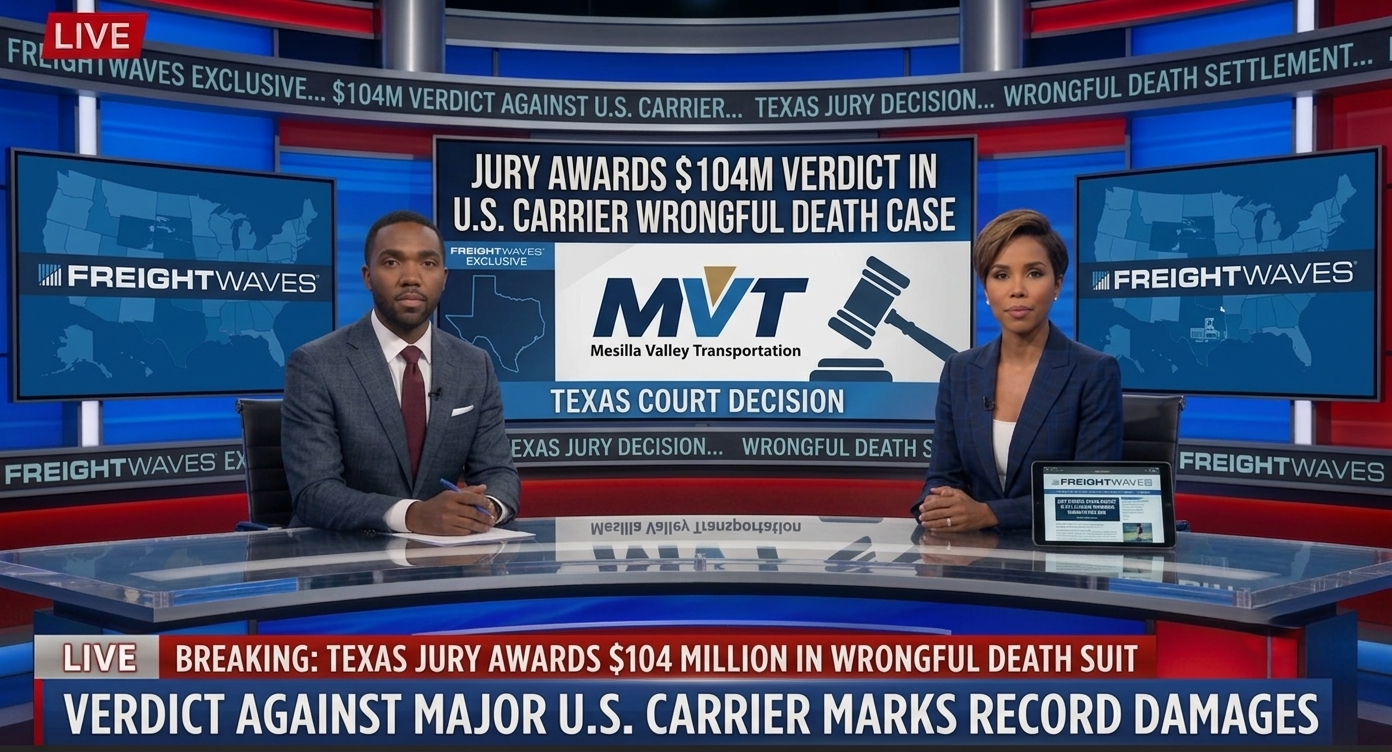
A jury just sent a message that’s going to ripple through the entire trucking industry: $104 million for one family, after a company let an exhausted driver stay behind the wheel.
An El Paso jury has held Mesilla Valley Transportation (MVT) and one of its drivers responsible for a 2020 crash that killed Orlando Robles, a 38-year-old father who was simply asleep in the truck’s sleeper berth when everything went wrong. This wasn’t a random accident nobody could’ve prevented — the case centered on a company policy that let drivers stay awake all night instead of actually sleeping before getting behind the wheel.
The $104 Million, Broken Down
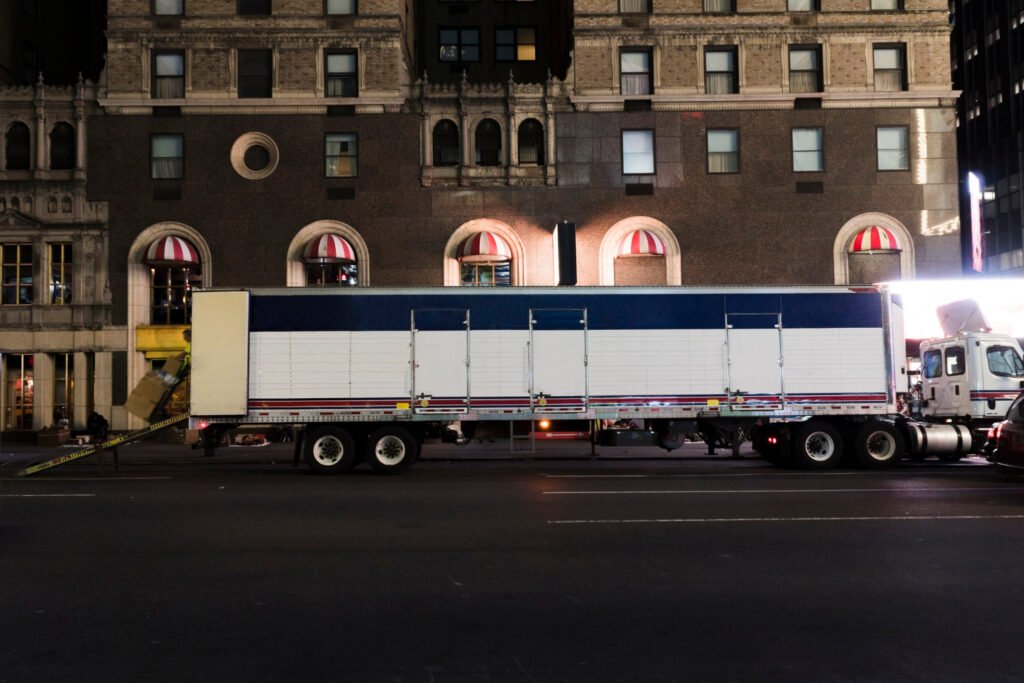
Here’s exactly how the jury split the verdict between Robles’ surviving family members:
- $76.5 million — awarded to Robles’ wife, mother, and five other children, represented by Glasheen, Valles & Inderman Injury Lawyers
- $27.5 million — awarded to Robles’ son, who was only 7 years old when his father died, represented separately by Tawney, Acosta & Chaparro P.C.
- Of that $27.5 million, $20 million was for compensatory damages and $7.5 million was specifically punitive damages — meant to punish the company, not just compensate the family
- The trial began June 30, 2026, and the verdict came down just over a week later
What Actually Happened
Rewind to around 4 a.m. on October 28, 2020. A Mesilla Valley Transportation driver and company trainer, Juan Garcia, was behind the wheel of a tractor-trailer on Interstate 40 in Sequoyah County, Oklahoma — a rural stretch more than 150 miles east of Oklahoma City. Garcia fell asleep at the wheel, and the truck drifted off the road, slamming into a parked box truck that had its emergency flashers on.
Robles was riding in the truck’s sleeper compartment at the time, resting before his own shift. The crash destroyed that compartment, and Robles was killed instantly.
The evidence that really turned the case, according to the family’s attorneys, was how MVT’s own safety rules worked. During cross-examination, the company’s national chief safety officer reportedly testified that drivers technically didn’t need to sleep to be considered “rested” — meaning drivers could spend the night watching movies or scrolling on their phones instead of actually sleeping, and it still counted as compliant with company policy.
In Their Own Words
The attorneys and family didn’t hold back after the verdict came in. Here’s some of what was said:
“Professional truck drivers and trucking companies have a responsibility to keep fatigued drivers off the road. When that responsibility is ignored, families pay the price.” — Alejandro Acosta III, attorney for Robles’ son
“This verdict sends a message that trucking companies have to follow safety regulations, including making their drivers get sleep and rest before they get on the road.” — David Glasheen, attorney for Robles’ wife and other children
Robles’ son’s mother, Paulina Merino, who attended every day of the trial, spoke about what the loss actually meant for a child growing up without his father:
“My son lost his dad when he was only 7 years old… every milestone, every birthday, every holiday, every achievement will always be missing the person who should have been there.”
Robles died just days before Halloween in 2020. According to his son’s attorneys, the boy had been looking forward to trick-or-treating with his father that year, and the following Halloween, he still put on the costume he’d planned to wear with his dad, hoping he’d somehow show up.
The Company’s Response
Mesilla Valley Transportation issued a brief statement after the verdict, acknowledging the loss without directly addressing the safety policy allegations:
“Our hearts continue to go out to the families affected by this tragic accident… While we respect the judicial process, we are evaluating our appellate options.”
That last line matters — it signals the company may appeal the verdict rather than simply pay it out, so this case could still have more chapters ahead.

Why This Case Is Bigger Than One Company
Mesilla Valley Transportation isn’t some tiny regional operation — headquartered in Las Cruces, New Mexico, and operating heavily out of El Paso, MVT runs one of the largest privately-owned truckload fleets in the entire country, with more than 1,600 trucks and over 5,000 trailers on the road.
That scale is exactly why attorneys and safety advocates are treating this verdict as more than just a payout to one grieving family. It’s being framed as a warning shot to the broader trucking industry about how companies define “rest” for their drivers — and what happens when a policy technically follows the letter of safety regulations while missing the entire point of them.
The Bottom Line
A family lost a father, a husband, and a son in the middle of the night on a quiet Oklahoma highway — and five and a half years later, a jury decided that loss was worth $104 million, split between the people left behind to carry it. Whether the case ends here or heads into an appeal, it’s already becoming a reference point for how trucking companies write, and enforce, their fatigue policies.
Sources referenced:
FreightWaves – “Texas jury awards $104M in wrongful death verdict against US carrier”
KFOX14/CBS4 – “Trucking firm ordered to pay $104M in wrongful death case over El Paso man’s death”
KTSM – “$104M Awarded in El Paso Trucking Fatality Wrongful Death Lawsuit”
KVIA – “Mesilla Valley Transportation reacts to $104 million verdict in wrongful death lawsuit”