






Sometimes winning at trial is only half the battle. Columbia University found that out the hard way when a federal appeals court looked at its $185 million jury win and basically said, “not so fast.”
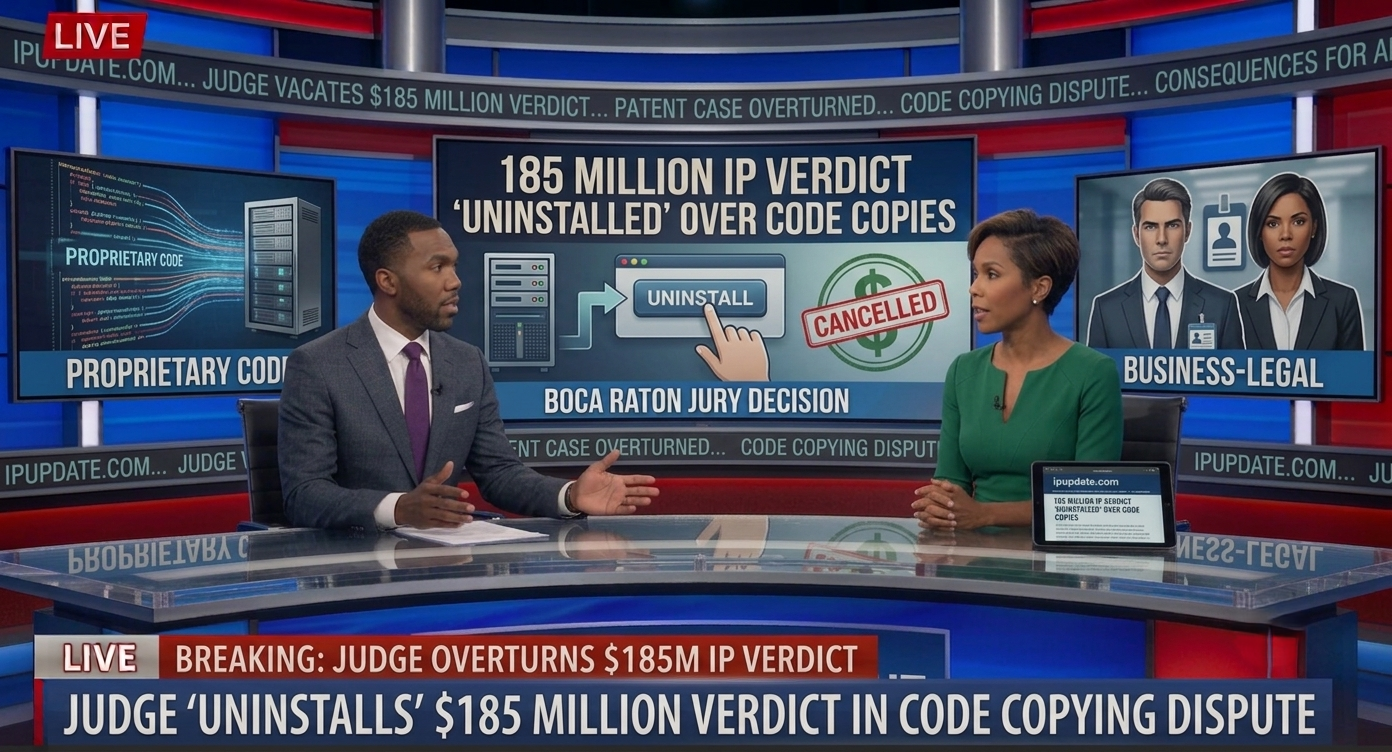
The U.S. Court of Appeals for the Federal Circuit has vacated a $185 million jury verdict that Columbia University had won against Gen Digital, the company behind Norton antivirus software, ruling that the patents at the center of the case cover an abstract idea rather than a genuine invention — and that a huge chunk of the damages should never have been awarded in the first place.

The $185 Million Verdict, Broken Down
- $185,112,727 — the exact damages figure a jury originally awarded Columbia back in 2022, calculated as a reasonable royalty for patent infringement
- More than $94 million of that total was tied specifically to Norton’s sales to customers outside the United States
- The original verdict was later enhanced by a multiplier of 2.6x, on top of an award of attorneys’ fees — both of which have now also been thrown out
- The case was originally tried in the U.S. District Court for the Eastern District of Virginia, and decided on appeal by the Federal Circuit on March 11, 2026
Wait, What Was This Case Actually About?
Back in 2022, a jury sided with Columbia University, ruling that Norton’s SONAR/BASH antivirus feature infringed on two Columbia patents covering computer security technology. The patents came out of research by Columbia professors Salvatore Stolfo and Angelos Keromytis, from the university’s Intrusion Detection Systems Laboratory.
The core idea behind the patents: catching malicious software by comparing what a program is actually doing against a model of what it’s supposed to be doing, using data gathered from multiple computers to build that model faster. At the time of the original verdict, Columbia’s Orin Herskowitz, senior vice president of intellectual property and technology transfer, celebrated the win publicly, framing it as recognition of groundbreaking work by the university’s researchers.
That verdict held up for years — until Gen Digital took it to the Federal Circuit.

Why the Appeals Court Threw It Out
The Federal Circuit’s ruling, issued by judges Dyk, Prost, and Reyna, hit the case from a few different angles at once.
First, and most fundamentally, the court ruled that Columbia’s patent claims describe an abstract idea rather than a genuinely new invention — the kind of “compare behavior to a model” concept that’s been around in virus detection for a long time. The court sent the case back down to the lower court to take a closer look at whether there’s still an “inventive concept” buried in there that could save the patents, but for now, that’s a real question mark hanging over the whole case.
Second — and this is the part patent lawyers are buzzing about — the court ruled that Columbia never should have been able to collect damages tied to Norton’s foreign sales. Relying on a 2007 Supreme Court precedent, the court explained the underlying logic in fairly simple terms:
“Software is not a tangible, infringing product until it is installed or encoded on a computer.”
In other words, when a customer overseas downloads and installs Norton software on their own computer, that copy of the software is made abroad, not in the United States — so U.S. patent law doesn’t reach it. Since foreign customers created their own software copies when they hit “install,” those copies couldn’t support a finding that Norton infringed U.S. patents.

Even the Willfulness Finding Survived — Just Not the Money
Here’s an interesting wrinkle: the appeals court didn’t wipe the slate completely clean for Gen Digital. The judges actually upheld the jury’s finding that Norton’s infringement was willful, ruling there was enough evidence that Norton’s own personnel knew about Columbia’s patents and the underlying technology before the patents were even formally issued, and failed to properly investigate the risk.
So Gen Digital didn’t walk away looking innocent — it just successfully argued that the damages number attached to that guilty verdict was calculated using the wrong legal theory.
The Domino Effect: Enhanced Damages and Legal Fees, Gone Too
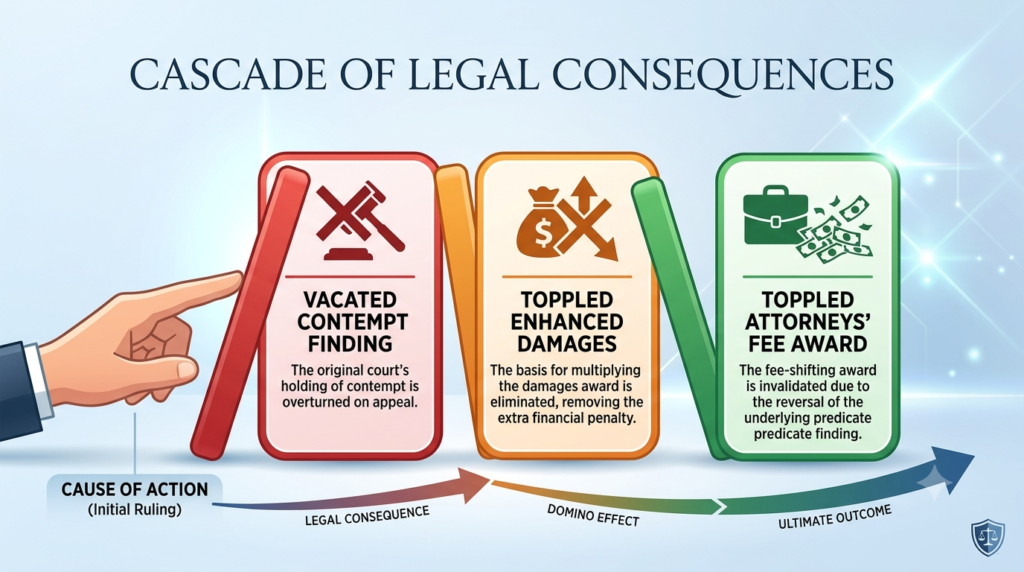
It wasn’t just the core damages number that got wiped out. The district court had also multiplied the original verdict using a 2.6x enhancement, and separately awarded Columbia its attorneys’ fees. Both of those additional awards were built partly on a contempt finding against Norton’s own law firm, Quinn Emanuel Urquhart & Sullivan — but the Federal Circuit had already reversed that contempt finding in a separate, related decision.
With that foundation knocked out, the enhanced damages and fee awards collapsed right along with it. The court has now instructed the lower court to reconsider both, this time without leaning on a contempt ruling that no longer exists.
So What Happens Now?
This case isn’t over — it’s just back at square one on a few key questions. The lower court now has to:
- Re-examine whether Columbia’s patents contain a genuine “inventive concept” that could still make them valid, even though the underlying idea is abstract
- Recalculate any damages using only domestic sales, since the foreign sales portion is now off the table entirely
- Reconsider whether enhanced damages or attorneys’ fees are appropriate, without relying on the now-reversed contempt finding
Legal experts are already flagging one big lesson from this ruling: Columbia actually had a possible alternative argument — that its U.S.-based actions indirectly caused the foreign sales — but its legal team never presented that specific theory to the jury at trial. Because of that, the appeals court refused to let Columbia fall back on it now. A theory you don’t argue at trial, according to the court, is a theory you can’t use to save a verdict later.
The Bottom Line
A university that built genuinely useful cybersecurity research spent years fighting for damages against one of the biggest antivirus brands in the world — and won, only to see almost the entire financial reward unravel on appeal over legal technicalities involving where, exactly, a piece of software gets “made.” The willfulness finding survived, the abstract-idea question is still very much alive, and the dollar figure that made headlines back in 2022 is, for now, back on the table entirely.
Sources referenced:
Justia – “Trustees of Columbia University v. Gen Digital Inc., No. 24-1243 (Fed. Cir. 2026)”
FindLaw – “Trustees of Columbia University in City of New York v. Gen Digital Inc (2026)”